Mi Fu
Introduction
Mi Fu (1051-1107) was a prominent figure during the Northern Song Dynasty(960-1127), celebrated for his expertise in calligraphy and painting. Among the "four great artists of the Song," Mi Fu's artistic contributions have been influential in shaping Chinese art, particularly in the domains of calligraphy and landscape painting. His work is frequently showcased in exhibitions across China, highlighting his enduring legacy in the world of Chinese art. Mi Fu's distinctive style and pioneering techniques have left a lasting impact on the traditions of Chinese calligraphy and painting.
Early Life
Mi Fu was born in 1051 in the Northern Song Dynasty, a period marked by cultural prosperity and intellectual advancement. His early years were influenced by the scholarly environment of his family, which fostered his interest in the arts. The Song Dynasty (960-1279) was a time when literature and art flourished, providing a rich cultural backdrop for Mi Fu's development as an artist. By the age of 20, Mi Fu was already recognized for his artistic talent, a recognition that would continue to grow throughout his life.
Artistic Career
Mi Fu's career spanned several decades, during which he developed a unique style that combined elements of both traditional and innovative techniques. His approach to art was characterized by a deep understanding of the spiritual and emotional elements that underpin Chinese aesthetics.
Calligraphy
Mi Fu is best known for his contributions to the art of calligraphy. His style was characterized by the fluidity and elegance of his brushstrokes, which conveyed a sense of movement and vitality. Mi Fu's calligraphy was not only a visual art form but also an expression of his philosophical beliefs, emphasizing the importance of creativity and emotional depth over mere technical precision. His works are often compared to those of other renowned calligraphers of his time, such as Su Shi and Ouyang Xiu, with whom he is frequently exhibited. Mi Fu's influence on calligraphy is evident in the numerous ink rubbings and exhibitions dedicated to his work, showcasing the enduring appeal of his artistic vision.
Painting
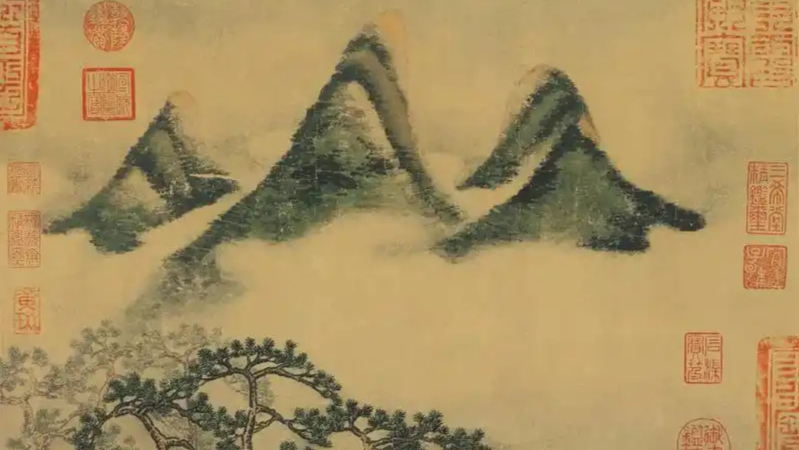
In addition to his calligraphic achievements, Mi Fu was also a respected painter, known for his landscape compositions. His paintings often depicted serene natural scenes, reflecting the tranquil and introspective qualities that he admired in the works of earlier masters like Dong Yuan. Mi Fu's use of large ink dots and varying shades to represent elements such as clouds and water was pioneering. His style was sometimes controversial at the Northern Song court, but it has since been recognized as a significant influence on the development of Chinese landscape painting.
Influence and Legacy
Mi Fu's influence extended far beyond his lifetime, as his artistic principles and techniques continue to inspire successive generations of artists. His approach to calligraphy and painting set a precedent for the integration of personal expression and technical skill, a balance that has become a hallmark of Chinese art. Mi Fu's legacy is celebrated through numerous exhibitions and scholarly studies, which explore the depth and complexity of his work.
Personal Life
Mi Fu lived a life deeply intertwined with the cultural and intellectual currents of his time. Despite the controversies surrounding his style at the court, he maintained a steadfast commitment to his artistic vision. His personal relationships with other literati, such as Su Shi and Wang Shen, reflected his engagement with the broader artistic community of the Song Dynasty. These connections provided a platform for the exchange of ideas and artistic collaboration, further enriching Mi Fu's contributions to Chinese art.
Notable Works
Mi Fu's body of work encompasses a range of calligraphic scrolls and landscape paintings, many of which are held in prestigious museum collections. Notable works include his calligraphy pieces that exhibit his mastery of brushwork and his paintings that capture the serene beauty of natural landscapes. These works are celebrated for their artistic excellence and serve as enduring testaments to Mi Fu's role as a pivotal figure in the history of Chinese art.








